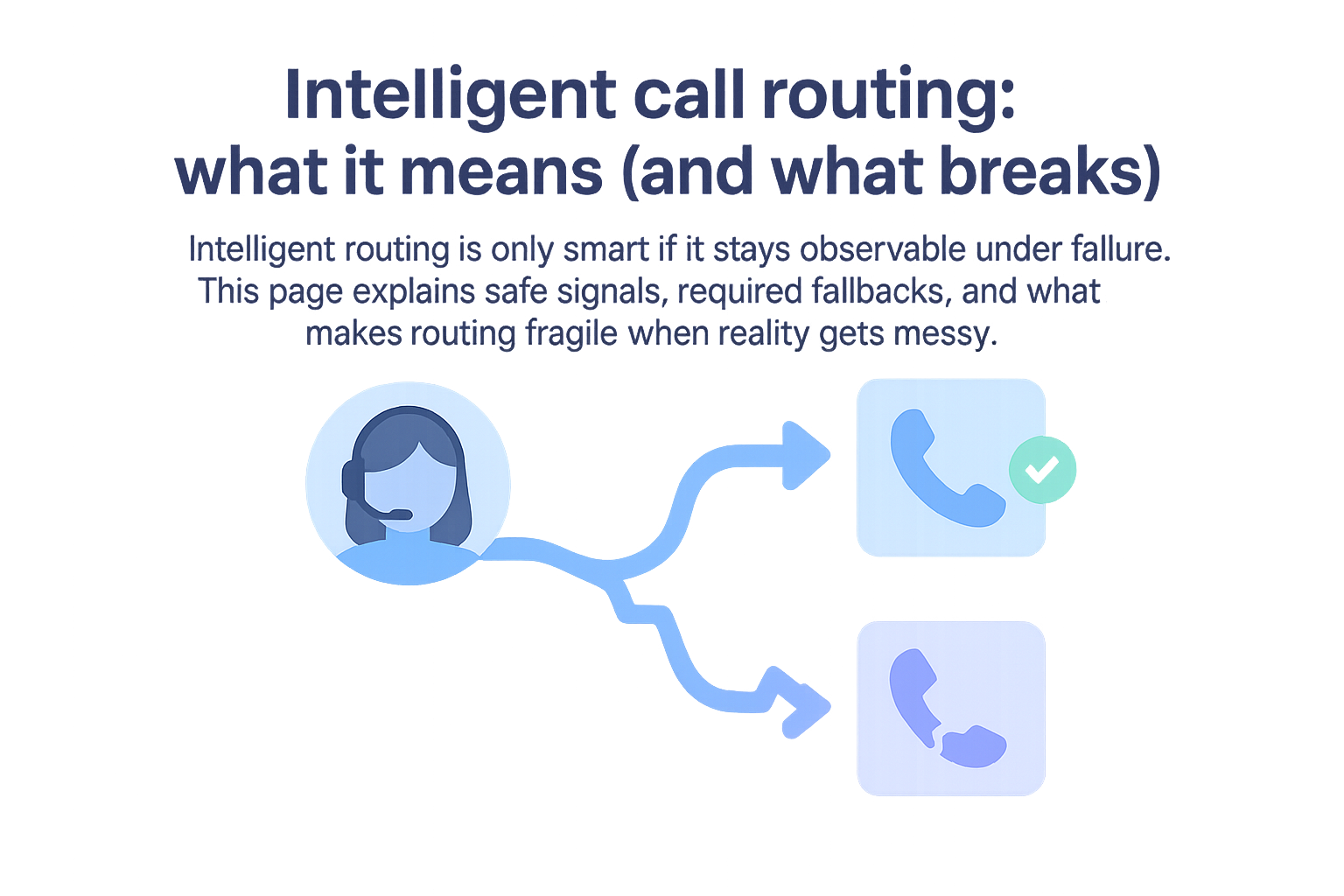

Introduction: Understanding Phone Call Routing Systems
When someone reaches out to your organization for help, you want to connect them with the right person as quickly and smoothly as possible. A phone call routing system is a crucial technology that makes this happen. Especially in a busy call center or helpline setting, this system eliminates confusion and long waits by automatically directing callers. Understanding how it works is the first step toward improving your customer service and ensuring every person feels heard and supported from the moment they call.
For a comprehensive framework on evaluating routing as a reliability system—including fallbacks, overflow behavior, and audit requirements—see our guide to call routing solutions.
However, businesses often face several common challenges when setting up a call routing system, such as integrating with existing technology, configuring routing rules to match customer needs, managing call volume spikes, and ensuring the system is user-friendly for both customers and staff. Let’s dive in!
What Is a Phone Call Routing System?
A phone call routing system is a call management feature that automatically organizes and allocates incoming calls based on a predetermined set of rules, functioning much like a virtual receptionist with instant knowledge of where to direct each caller. Rather than relying on a person to transfer every call manually, the entire routing operation is managed by the system itself.
As a fundamental component of today’s business phone systems and call centers, this technology ensures customer calls are handled efficiently—when someone calls, the system evaluates details like the dialed number or IVR choices to identify the optimal destination. This process guarantees that calls quickly reach the most suitable agent or department.
The primary aim is to provide callers with a smooth experience; with well-defined routing rules, you can efficiently manage large volumes of calls and connect customers to representatives capable of resolving issues on the first attempt. A wide variety of routing strategies exists, ranging from straightforward to intricate, to accommodate different types of call scenarios.
Key Features of Modern Call Routing
Today’s call routing software goes far beyond basic call transfers. Modern systems use intelligent call routing to make smart decisions in real-time. This call management feature can integrate with other business tools, like your CRM, to access customer data and route calls based on a person’s history with your organization.
This intelligence allows you to route calls with greater precision. For example, a high-priority caller could be moved to the front of the queue, or a caller with a technical issue could be sent directly to an agent with the right expertise. It’s all about using information to create a better, more personal experience.
Difference Between Call Forwarding and Routing
While often used interchangeably, basic call forwarding and call routing serve different functions within a phone system. Understanding the distinction is key to choosing the right solution for your business needs. Basic forwarding is a simple feature that redirects all incoming calls from one phone number to another single number. For example, you might forward your office line to your mobile phone.
Routing, on the other hand, is a more sophisticated process. It involves distributing incoming calls among a group of people or departments based on specific rules. Instead of sending all calls to one destination, the system analyzes the call and sends it to the best available person.
For some professionals, a basic call forwarding service may serve as an excellent starting point for ensuring no caller is missed. However, as an organization grows, a complete call routing system becomes necessary to manage higher volumes and direct callers with more precision. This is especially true for growing nonprofits that operate an inbound contact center. Check if your call forwarding service supports more advanced options.
How Call Routing Systems Work
At its core, a call routing system works by identifying, queuing, and distributing incoming calls. The process begins the moment a person dials your number. Your business phone system immediately starts qualifying the caller based on preset criteria, such as the number dialed or the time of day.
From there, it uses this information to send the call to the right queue and, ultimately, to the agent with the right skills to handle the inquiry. This automated process ensures efficiency and connects callers with the help they need faster. Let’s look at the specific steps involved.
Step-by-Step Breakdown of the Routing Process
The journey of an incoming caller through a routing system is a quick and automated, multi-step process. Each stage is designed to reduce wait times and get the caller to the right person on their first call.
This process ensures smooth management and prevents callers from getting lost in the system. It also helps manage queues effectively, so no single agent is overwhelmed while others are idle. The entire sequence happens in just a few moments.
The system first identifies the caller and the purpose of their inquiry, often using an IVR menu (“Press 1 for sales, Press 2 for support”).
Based on the response, the system places them in the appropriate queue alongside others with similar needs.
The system then sends the caller to the next available agent in that queue according to your chosen routing rules, such as who has been idle the longest.
Integrating Routing With Other Communication Tools
Yes, a modern call routing system can and should be integrated with other business communication tools. A standalone phone feature is useful, but its power multiplies when it communicates with the other software you use every day. This integration creates a unified contact center where information flows freely between platforms.
The most common integration is with a Customer Relationship Management (CRM) system or database. When your call routing software connects to your database, it can automatically pull up a caller’s record for the agent. This gives your team immediate context about the caller’s history, previous issues, and why they might be calling, leading to a more personalized and efficient conversation.
You can also integrate your phone system with case management software, messaging systems, and other tools. This allows you to create a comprehensive communication hub that works even outside of normal business hours, ensuring every interaction is tracked and managed effectively.
Core Routing Methods Explained
Now that we have an essential understanding of how the system works, it’s time to think through an effective routing strategy. You first need to understand the different types of methods at your disposal. Each method distributes calls based on a different logic, and the best one for you depends on your team’s structure and goals. Some methods prioritize even workload distribution, while others focus on matching specific agent skills with caller needs.
Choosing the right approach will directly impact agent availability and the overall caller experience. Let’s explore some of the most common methods to see how they work and what situations they are best suited for.

Skills-Based Routing
Skills-based routing is an intelligent method that connects callers to the most appropriate agent based on their specific needs. Instead of just sending a caller to the next person in line, the system identifies the required skill set for the inquiry and finds an agent who possesses it. For example, a call in Spanish would be routed to a Spanish-speaking agent.
This approach dramatically improves the customer experience because callers are matched with someone who is equipped to help them right away. It avoids frustrating transfers and ensures the person they speak to is knowledgeable about their specific issue, whether it’s technical support, a billing question, or a sensitive matter requiring a trained advocate.
By directing calls this way, you also boost agent performance and confidence. Team members can focus on the areas where they are strongest, leading to faster resolutions and higher job satisfaction. It’s a win-win for both your team and the people you serve.

Round-Robin & Sequential Routing
Round-robin and sequential routing are two common methods for ensuring a fair and orderly distribution among a group of agents. The round-robin method distributes calls evenly in a continuous loop. If you have three agents, the first caller goes to Agent A, the second to Agent B, the third to Agent C, and the fourth goes back to Agent A. This balances the workload and promotes agent productivity.
Sequential, also known as fixed-order routing, sends calls to agents in a predetermined, static order. The first agent on the list will always receive the call if they are available. Only when they are busy does the call move to the second agent, and so on. This method is useful when you have agents with different levels of experience, ensuring your most skilled person handles inquiries first. Speak to an Expert
Routing Strategies for Improved Efficiency
Beyond the basic methods, you can develop a more advanced routing strategy by combining different routing rules. This allows you to create a system that is perfectly tailored to your organization’s workflow, volumes, and customer needs. An effective strategy is dynamic and can adapt to different situations.
For instance, you might use one set of rules during peak hours and another during quieter periods. By thinking strategically about how you manage calls, you can significantly improve efficiency and service quality. Here are a few strategies to consider.
Automated vs Manual Methods
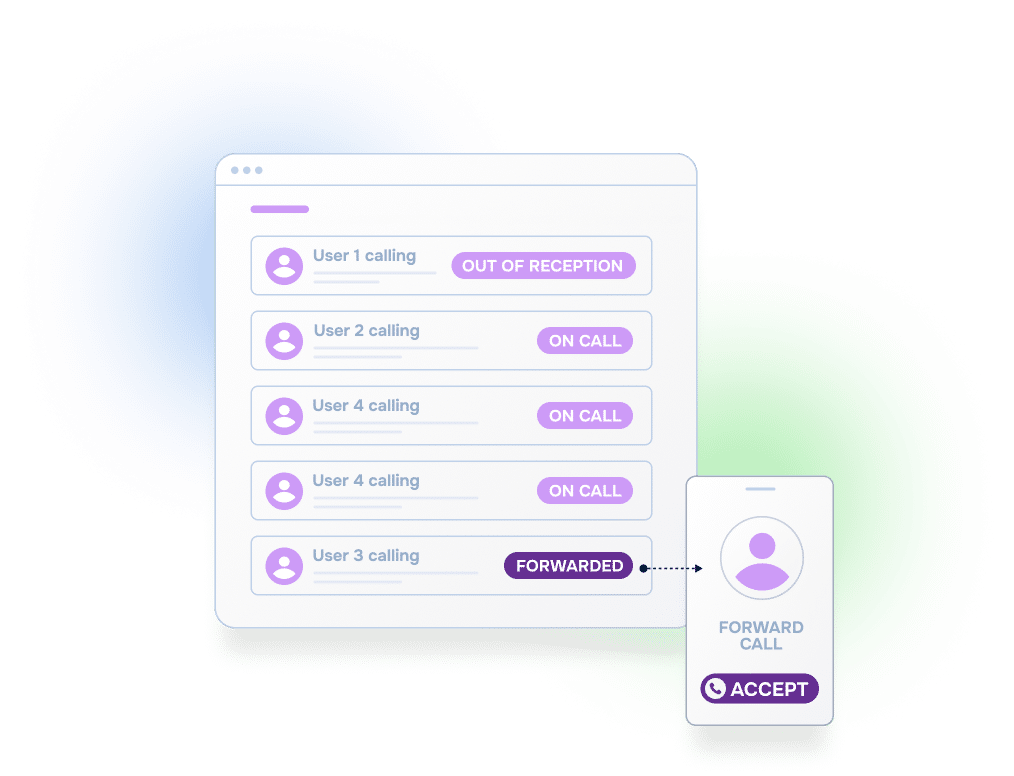
The difference between automated and manual call routing is like the difference between a modern traffic light system and a police officer directing cars by hand. Manual routing relies on a human, typically a receptionist, to answer every caller and physically transfer it to the right person. While personal, this approach can be slow and inefficient, especially with high call volumes.
Automated routing uses technology, specifically an automatic call distribution (ACD) system, to handle this process. The ACD is the engine behind effective management, as it manages queues and distributes based on programmed rules without human intervention. This frees up your team to focus on helping callers rather than just directing traffic.
For most businesses and helplines today, automated management is the standard. It reduces human error, minimizes wait times, and ensures that every call is handled consistently and efficiently, creating a much smoother experience for everyone involved.
Time-Based & Geographical Routing
Time-based and geographical routing are powerful strategies that use the time of day and the caller’s location to direct calls intelligently. This ensures that callers are connected to available agents and receive relevant support based on where and when they are calling from.
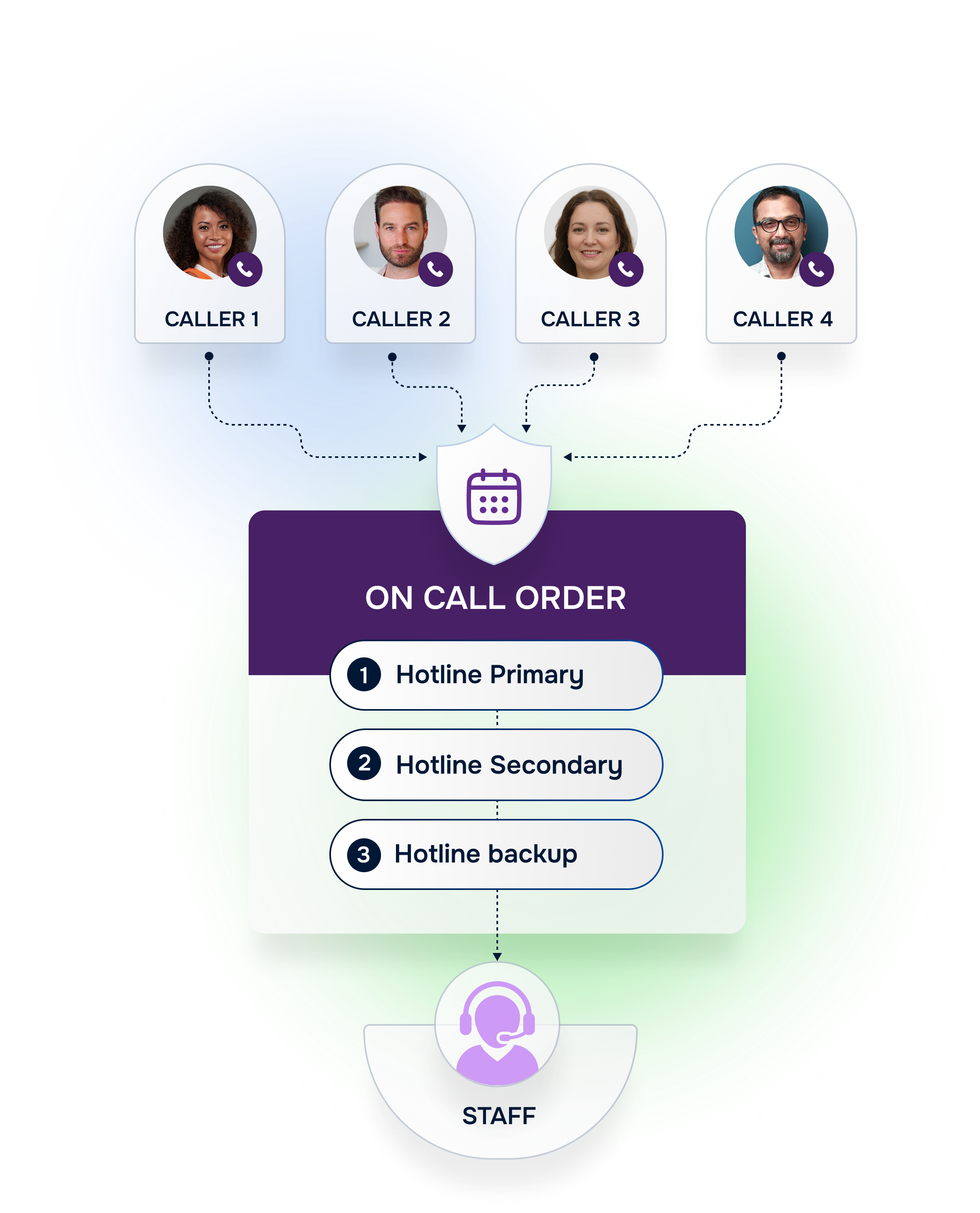
Time-based rules use your defined business hours to manage calls. During work hours, they might go to your main team. After hours or on weekends, you can automatically route them to a voicemail, an after-hours support line, or a team in a different time zone. Still more advanced logic utilizes on-call shift schedules.
Geographical strategies use the caller ID to determine the caller’s location and route them accordingly, which is ideal for organizations with regional offices or language-specific needs.
These strategies help you better serve your audience by being responsive to their unique circumstances. Key applications include:
- Routing to different offices based on the caller’s time zone.
- Providing custom greetings for holidays or after-hours inquiries.
- Directing callers to local branches or representatives.
- Ensuring 24/7 coverage by routing to teams across the globe.
Key Benefits of a Telephone Call Routing System
Implementing a call routing system significantly enhances customer satisfaction by quickly connecting callers to the right person, leading to faster issue resolution and improved first call resolution rates. Additionally, these systems optimize internal resources by enhancing agent availability and balancing workloads, resulting in a more efficient environment for your team. Let’s examine how these benefits impact both your callers and your productivity.
Enhancing Customer Service
Excellent customer service starts with being accessible and responsive. A call routing system is a fundamental tool for achieving this. By implementing an effective solution, you show callers that you respect their time. The system minimizes waiting times and eliminates the frustration of being transferred multiple times.
When a person calls for customer support, their experience with your phone system sets the tone for the entire interaction. A smooth, quick connection to a capable agent builds trust and confidence. This is especially critical for helplines and crisis centers, where a positive initial connection can make all the difference.
- Reducing wait times:
Callers are placed in the right queue and connected to an available agent faster.
- Increasing first call resolution:
Matching callers with the right expert means problems are solved on the first attempt.
- Providing a personalized experience:
Using caller data makes the interaction feel more personal.
- Lowering call abandonment:
People are less likely to hang up if they feel they are making progress.

Increasing Productivity
A call routing system doesn’t just benefit callers; it’s also a major boost for agent productivity. By automating the call distribution process, the system ensures even and logical distribution among your team. This prevents your most experienced agents from being overloaded and at risk of burnout while others sit idle, creating a more balanced and efficient workflow.
When the routing process automatically directs inquiries to the right agent, it cuts down on the time wasted on internal transfers and consultations. Your team members can spend less time figuring out where a caller needs to go and more time actually resolving issues. This focused effort helps them handle more callers accurately throughout the day.
Ultimately, this optimization reduces wait times and allows your team to operate at its full potential.

Key Benefits for Nonprofits & Crisis Centers
For a crisis center, hotline, or nonprofit helpline, the stakes are incredibly high with every inquiry. A call routing system offers unique benefits that are vital in these environments. The ability to route a caller based on their specific need to an advocate with the right skill set can be life-changing. For example, a caller can be directed to a coordinator trained in a specific type of crisis.
Features like call forwarding are also indispensable, especially for organizations that rely on volunteers or have staff working remotely. A call can be forwarded seamlessly to a volunteer’s personal phone, ensuring that someone is always there to answer. This flexibility helps a crisis line maintain 24/7 availability and provide uninterrupted support to the community. Schedule a Consultation
Implementing an Effective Phone Call Routing System
Putting an effective phone call routing system in place requires thoughtful planning. It’s more than just buying software; it’s about designing a routing strategy that aligns with your organization’s goals and your callers’ needs. The right business phone system will give you the tools to build and refine this strategy over time.
A successful implementation involves understanding your callers, assessing your team’s skills, and choosing the right features for your needs. The following sections will guide you through these crucial considerations.
Essential Features to Consider When Choosing a System
When selecting call routing software, it’s important to look for features that provide both power and flexibility. The right system will grow with you and adapt to your changing needs. A key management feature to look for is a user-friendly interface that allows you to easily create and modify your rules without needing technical expertise.
Your chosen system should also be able to leverage customer data to make smarter routing decisions. Look for software that can integrate with your existing CRM or database. This will enable you to create highly personalized experiences for your callers, as the system will have context before the conversation even begins.
Modern call routing systems are designed with security in mind, enabling sensitive customer information to be handled safely. Many solutions offer encryption, secure data transfer, and access controls to ensure that only authorized personnel can access confidential details during the process.
- Intuitive Call Flow Options:
Some platforms offer a visual drag-and-drop editor to design and change your routing rules. Other organizations prefer to have the provider handle implementation and updates.
- CRM and Software Integrations:
The ability to connect with other business tools to share customer data.
- Advanced Routing Options:
Support for skills-based, time-based, and other routing methods.
- Reporting and Analytics:
Dashboards to monitor metrics and agent performance.
Tips on Building and Setting Up a Call Routing System
Setting up an effective call routing system starts with understanding who is calling you and why. Conduct research to identify common caller needs and concerns. This information will help you design a logical IVR menu and choose the right routing methods to address those needs efficiently.
Next, perform a skill assessment of your team. Identify which agents have specific language skills, technical knowledge, or training in certain areas. This will be the foundation for implementing skills-based routing, which is one of the most effective routing strategies for improving first-call resolution.
Finally, consider what extra features will support your goals. Recording can be used for training and quality assurance, while analytics will help you refine your system over time. **
Map Your Flow
Visually outline the ideal path for different types of callers. **
Start Simple
Begin with a basic setup and add complexity as you learn more. **
Gather Feedback
Ask your agents and callers for feedback to identify pain points. **
Review and Refine
Regularly analyze data to optimize your rules.

Tips for Nonprofits and Crisis Centers
For any growing organization starting to build its phone support operations, a full-scale system may seem daunting. For nonprofits and crisis centers, a specialized call forwarding service, like the one offered by Helpline Software, is designed for the unique needs of helplines. It allows you to route a crisis line’s main number to a list of staff or volunteer advocates’ personal phones. The system will ring them in a specific order or all at once until the first call is answered, ensuring the person in need connects with help immediately.
This feature is a crucial component of a business phone system for organizations that depend on remote or on-call staff. It maximizes agent availability without the complexity of a larger system, providing a reliable and effective solution for managing incoming support requests.
Choosing the Right Option
A well-implemented call routing system is essential for both businesses and nonprofits, especially crisis centers that rely on efficient connection to the right agent. By understanding the intricacies of call routing methods and strategies, organizations can enhance their customer service and ensure that every call is directed to the right agent based on skills and availability. This not only boosts productivity but also fosters trust in the services provided, making it crucial for nonprofits where every call matters.
If you’re a growing nonprofit or crisis center ready to elevate your inbound call handling capabilities, get in touch with us today for tailored solutions that meet your specific needs. Schedule a Consultation