

Do you notice your hotline team is burning out too often, with one person feeling overwhelmed every month? As the crisis coordinator, you’re managing advocates working from 30 to 250 hours a week, from experienced staff to new volunteers. How can you offer the protection they need from burnout?
Burnout Prevention: The Data You Need to Track
This is a real situation we’ve seen at crisis agencies.
Start by checking the data. See who’s covering the most shifts and ask if they can reduce their load. Keeping key staff is crucial, so let’s begin there.
But the data didn’t help. Next month, another team member burns out. Why? We didn’t even check in—they only worked 30 hours last month. So how are they burning out? You think, I know this person; they work hard. What’s going on?
How a Burnout Protection System Can Save Your Crisis Team
We need different data.
The Solution: We checked how much time each person spent on call. Surprisingly, one person handled almost 20% of all hotline calls, but only worked 30 hours a month. Shifts were very uneven. That’s crazy!
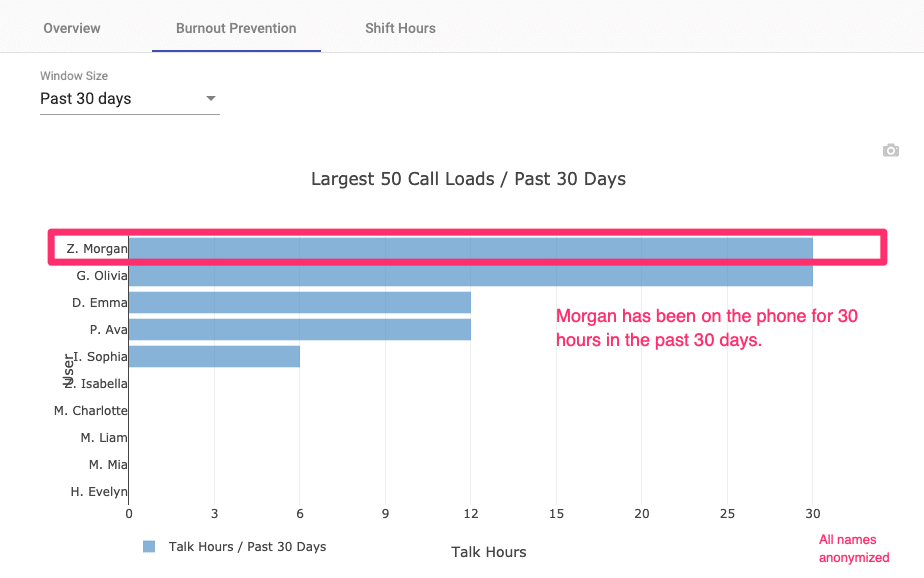 HelplineSoftware.com’s burnout protection system allows you to detect this kind of burnout before it happens.
How a Burnout Protection System Works
When the crisis coordinator checked our new burnout protection dashboard, they realized someone was at risk of burnout. They went to email that person but found an email instead, saying the person had already left the organization. Sadly, only the admin had the dashboard access, not the volunteer who burned out.
This dashboard is now a standard part of our hotline management system. For a deeper look at how routing defaults cause uneven workload—and how to fix them—see call routing workload and burnout(coming in 7 weeks).
Protect Your Team from Hotline Burnout
Do you want to learn more about best practices, or do you need help solving a specific issue for your local, state, or national 24-hour hotline? Reach out and introduce yourself at sales@helplinesoftware.com or schedule a meeting with an expert.